A plain, tested guide to picking the right mix and baking it right the first time.
Gluten free baking mixes for beginners are the easiest way to bake cookies, donuts, and cakes that actually hold together, because the mix already contains the right blend of gluten free flours, starches, and binder in the correct ratio. You add a few wet ingredients and bake, instead of buying six different flours and guessing how to combine them.
|
The short version • A gluten free baking mix is a ready measured base for one type of bake. You add a few wet ingredients and bake. • The two things that ruin most beginner bakes are over mixing and not adjusting for moisture. Mix until just combined, then let the batter rest 15 to 30 minutes. • Most good mixes already contain xanthan gum, about 1/4 teaspoon per cup of flour, so you usually do not add your own. • Read the ingredient list. All natural, non-GMO mixes with recognizable ingredients give you cleaner flavor and fewer fillers. • Start with a forgiving bake like cookies or donuts before you try yeast bread. |
What is a gluten free baking mix, and how is it different from gluten free flour?
A gluten free baking mix is a complete dry base built for one specific bake, while gluten free flour is only a flour replacement that you still build a full recipe around. This is the single point that confuses most first time bakers, and getting it straight saves you a lot of wasted ingredients.
A mix already has the leavening, often the sugar, and almost always the binder measured for you. A flour, even a good 1-to-1 blend, is just the starting point. Here is how the three common options compare.
|
|
Gluten free baking mix |
1-to-1 gluten free flour |
Baking from scratch |
|
What it is |
A finished dry base for one bake (cookies, donuts, cake) |
A flour only substitute for wheat flour |
Your own blend of separate flours, starches, and binder |
|
What you add |
A few wet ingredients (oil, water or milk, sometimes egg) |
The rest of a full recipe |
Everything, measured yourself |
|
Binder included |
Usually yes, xanthan gum is already in |
Usually yes in 1-to-1 blends |
No, you add it |
|
Best for |
First bakes and quick results |
Converting a recipe you already know |
Experienced bakers who want full control |
|
Beginner risk |
Low |
Medium |
High |
If your goal is to get a good batch of cookies out of the oven this afternoon, you want a mix. If your goal is to convert a pound cake recipe you already love, you want a 1-to-1 flour. They are not interchangeable.
Why are gluten free baking mixes the easiest way for beginners to start?
Mixes are easiest because the hardest part of gluten free baking, getting the flour blend and binder ratio right, is already done for you. When people bake with a single gluten free flour like rice flour or almond flour on its own, the results come out flat, gritty, or crumbly. No single gluten free flour behaves like wheat flour, so good bakes rely on a blend, plus a binder to replace what gluten normally does.
Gluten is the protein in wheat, barley, and rye that gives dough its stretch and traps gas so baked goods rise and hold their shape. People with celiac disease have to avoid it completely. Remove gluten and you need something else to do its job. In a baking mix, that job is handled by a starch and gum combination the maker already balanced. You inherit years of recipe testing in one bag, which is why a beginner using a mix often gets a better result on the first try than a beginner blending flours alone.
How do you use a gluten free baking mix without dry or crumbly results?
To avoid dry or crumbly results, mix the batter only until it just comes together, let it rest so the starches absorb liquid, and pull the bake out as soon as it tests done. Most beginner failures trace back to those three steps. Here is the order that works.
1. Measure the way the box tells you. Gluten free flours are light, so scooping straight from the bag packs in too much and dries out the bake. Weigh on a kitchen scale if you can, or spoon the mix into the cup and level it off.
2. Bring wet ingredients to room temperature. Cold eggs and cold butter do not combine smoothly with gluten free bases and leave a lumpy, uneven batter.
3. Mix until just combined. With wheat flour you mix to build gluten. With a gluten free mix there is no gluten to build, so over mixing only turns the texture gummy and dense. Stop as soon as the dry pockets disappear.
4. Let the batter or dough rest 15 to 30 minutes before baking. Gluten free flours soak up liquid more slowly than wheat flour. A short rest lets the starches hydrate, which cuts grittiness and improves the crumb.
5. Watch the oven, not just the timer. Gluten free bakes often brown outside before the inside is set. Use the toothpick test, and if they brown too fast, lower the temperature by about 25 degrees Fahrenheit and bake a little longer.
6. Cool before you cut. Gluten free bakes finish setting as they cool. Slicing a warm loaf or lifting a soft cookie too early is what makes it fall apart.
What are the most common beginner mistakes with gluten free baking mixes?
The most common mistakes are adding binder a mix already contains, treating a mix like a flour, and skipping the rest. Each one has a simple fix.
• Adding extra xanthan gum. Most mixes already include it, and more makes the texture slimy. Check the ingredient list first, and only add xanthan if the product does not list it.
• Swapping a mix into an unrelated recipe. A cookie mix is formulated for cookies. Pouring it into a bread recipe cup for cup will not work. Match the mix to the bake, or use a 1-to-1 flour for conversions.
• Skipping the rest period. No rest means the starches have not absorbed the liquid yet, which reads as gritty or sandy.
• Over baking to be safe. Gluten free bakes dry out fast. Pull them at the first clean toothpick instead of adding insurance minutes.
• Ignoring cross contamination. If you bake for someone with celiac disease, a gluten free mix only stays gluten free if your bowls, pans, and utensils are clean of wheat flour.
Are gluten free baking mixes healthy?
A gluten free baking mix is only as healthy as its ingredients, and the words gluten free on the front tell you nothing about that. Gluten free is a medical necessity for the roughly 3 million Americans with celiac disease, not a built in promise of fewer calories or less sugar. In the United States, a gluten free label means less than 20 parts per million of gluten, which is a safety standard, not a nutrition claim. Some mixes lean heavily on refined starches and added sugar. Others are built on recognizable, whole food ingredients.
So judge the mix by the back of the bag, not the front. A few signals of a cleaner mix:
• A short ingredient list you can actually read.
• Non-GMO ingredients, and no artificial flavors, no artificial preservatives, and no added MSG.
• A real food base. A sweet potato or banana base, for example, brings flavor and moisture from food rather than from fillers.
• Clear allergen information if you also avoid dairy, eggs, or nuts.
This is the standard we hold our own mixes to. Both of our mixes are all natural, non-GMO, and vegan, with no preservatives or artificial flavors, and you can read exactly what goes into our mixes before you buy.
How do you choose a gluten free baking mix as a beginner?
Choose a mix that matches the bake you actually want, includes its own binder, and uses ingredients you recognize. Run any product through this quick checklist:
• It says gluten free on the label. That claim is regulated, so a labeled product must contain less than 20 parts per million of gluten.
• It already contains a binder like xanthan gum, so you do not have to buy and balance it yourself.
• The ingredient list is short and readable.
• It is non-GMO and free of artificial flavors and preservatives.
• The allergen profile fits you. Look for vegan, dairy free, or nut free if those matter.
• The prep time is honest and short. A good beginner mix takes a handful of steps, not an afternoon. Our gluten free mixes go from box to oven in about 15 minutes.
• It is the right bake to start with. Cookies and donuts are the most forgiving. Save bread for later.
Which gluten free baking mixes should beginners try first?
Start with cookies or donuts, because both are quick, hard to ruin, and need only a few wet ingredients. They give you a confident first win, which matters more than you would think when you are learning.
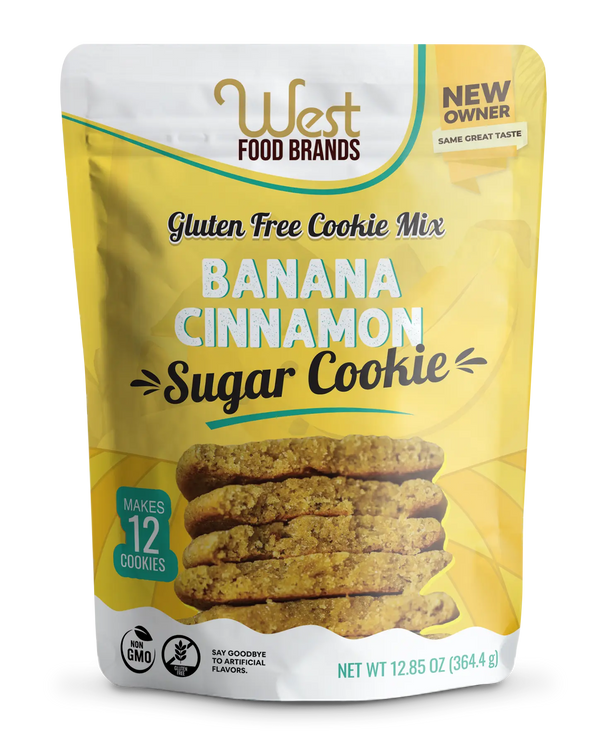
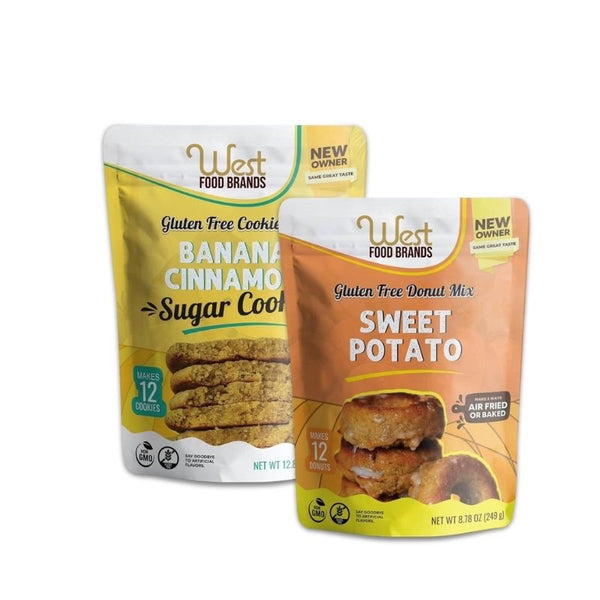
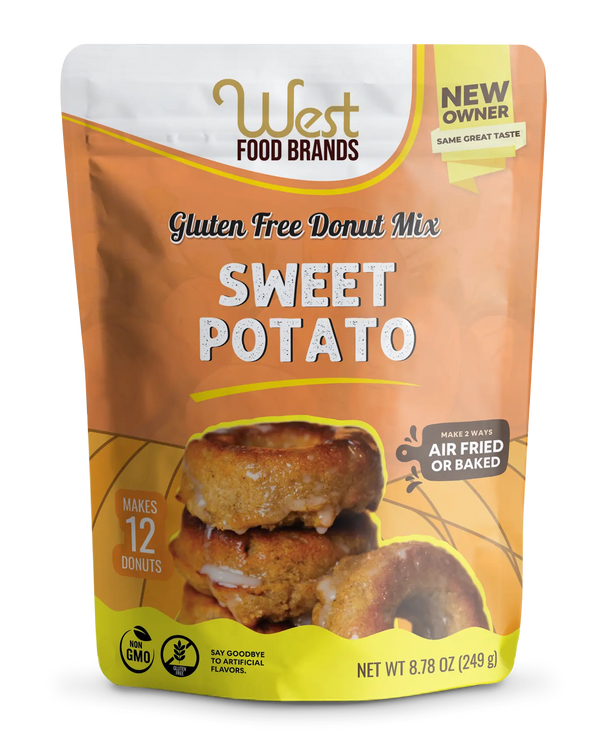
If you want a simple first bake, a gluten free sugar cookie mix or a gluten free donut mix takes the guesswork out of your first batch. Our banana cinnamon sugar cookie mix and our sweet potato donut mix are both all natural, non-GMO, and vegan. Once you are comfortable, you can move on to cakes and breads with the same technique you learned here.
Frequently asked questions about gluten free baking mixes for beginners
Do gluten free baking mixes need xanthan gum?
Usually no, because most gluten free baking mixes already include xanthan gum as the binder, typically around 1/4 teaspoon per cup of flour. Check the ingredient list before you add anything. Add your own only if the product does not list a binder, and even then start small, since too much xanthan turns batter slimy.
Can I use a gluten free baking mix instead of regular flour?
No, not as a one for one flour swap. A baking mix is formulated for a specific bake and often already contains leavening and sugar. If you want to replace wheat flour in a recipe you already use, reach for a 1-to-1 gluten free flour blend instead, which is built for that job.
Why are my gluten free baked goods gummy or crumbly?
Gummy usually means the batter was over mixed, has too much binder, or came out of the oven under baked. Crumbly usually means too little binder or too little moisture. The fixes are the same in most cases: mix only until combined, let the batter rest 15 to 30 minutes, and follow the liquid amounts on the box rather than eyeballing them.
Are gluten free baking mixes vegan or dairy free?
It depends on the brand, so always check the label. Some mixes call for eggs or butter, and some are fully plant based. Our mixes are vegan, which means no eggs or dairy required, but you should confirm this on any product you buy because it varies widely across the category.
Do gluten free baking mixes taste different from regular baking?
Modern mixes are much closer than they used to be, and the flavor comes mostly from the base ingredients. Mixes built on plain rice flour and starch can taste flat, while mixes built on real food, like sweet potato or banana, carry more natural flavor and moisture. Texture comes down to technique, which is why the rest and mix steps above matter.
How should I store a gluten free baking mix?
Keep an unopened mix in a cool, dry cupboard and use it by the date on the package. Once opened, transfer it to an airtight container so it does not pick up moisture or odors. Stored properly, a dry mix keeps its quality well past a single baking session.
Key takeaways
|
• A gluten free baking mix is a finished base for one bake. A 1-to-1 flour is a recipe wide flour swap. They are not the same tool. • Mixes are the easiest entry point because the flour blend and binder ratio are already balanced for you. • Beat dry and crumbly results by measuring correctly, mixing until just combined, resting the batter 15 to 30 minutes, and not over baking. • Most mixes already have xanthan gum, so do not add more unless the label tells you to. • Healthy depends on the ingredients, not the gluten free claim. Favor short, readable, non-GMO ingredient lists. • Start with cookies or donuts for a confident first bake. |
Written by the West Food Brands kitchen team. We make and test small batch, all natural gluten free mixes, so the tips here come from real bakes, including the dry and crumbly ones we got wrong when we started.
Trusted sources
• U.S. Food and Drug Administration, Gluten and Food Labeling
• Celiac Disease Foundation, Label Reading and the FDA