TL;DR: Sweet potato flour is a naturally gluten free flour made from dried, ground sweet potatoes. It adds moisture, a soft crumb, and a mild sweetness to gluten free baking, and it carries the fiber and vitamin A of the whole vegetable. It is not a one-to-one swap for wheat flour on its own, so it works best in a blend, which is how it is used in the West Food Brands Sweet Potato Donut Mix. Here is how to bake with it.
Sweet potato flour is having a moment in gluten free baking because it solves the texture problem that plagues many gluten free bakes. Wheat-free flours often turn out dry or gritty, and sweet potato flour brings back the moisture and tenderness. Here is what it is, how it behaves, how to substitute it, and why it pairs so well with other gluten free flours.
What is sweet potato flour?
Sweet potato flour is a flour made by drying sweet potatoes and grinding them into a fine powder. It keeps the natural color, fiber, and nutrients of the vegetable, so it has a pale orange tint and a faint sweetness. It is different from sweet potato starch, which is only the extracted starch with the fiber removed. The flour is naturally gluten free, grain free, and made from a single whole-food ingredient.
Is sweet potato flour gluten free?
Yes. Sweet potato flour is naturally gluten free, because sweet potatoes are a vegetable and contain no gluten at all. Gluten is found only in wheat, barley, rye, and triticale, according to the Celiac Disease Foundation. The one caveat is cross contamination during milling. If you bake for someone with celiac disease, choose a flour or finished mix that is certified gluten free, which means it is tested to under 20 parts per million of gluten.
How do you use sweet potato flour in gluten free baking?
Use sweet potato flour as part of a blend, not as the only flour. On its own it lacks the structure that holds a bake together, so it shines when combined with a lighter flour and a starch. A reliable starting point is to use it for 20 to 30 percent of the flour in a gluten free recipe and balance the rest with rice flour and a starch like tapioca. It also absorbs liquid well, so a few tips help:
· Add a little extra liquid, since sweet potato flour soaks it up and can dry out a batter.
· Pair it with a binder like flax or xanthan gum, since it has no gluten to hold structure.
· Expect a soft, moist, cake-like crumb, which is why it suits donuts, muffins, and quick breads.
Can you substitute sweet potato flour for regular flour?
Not at a straight one-to-one ratio. Sweet potato flour behaves differently from wheat flour, since it has no gluten and absorbs more liquid. Here is how it compares to common baking flours:
|
Flour |
Gluten free |
Best use |
Notes |
|
Sweet potato flour |
Yes |
Part of a blend for moist bakes |
Adds moisture and mild sweetness |
|
Wheat flour |
No |
Traditional baking |
Contains gluten for structure |
|
Rice flour |
Yes |
Blend base |
Neutral, can be gritty alone |
|
Almond flour |
Yes |
Low carb bakes |
Adds fat and density |
The simplest path is to let a pre-blended mix do the ratios for you, so you get the benefits of sweet potato flour without testing combinations yourself.
What does sweet potato flour taste like?
It has a mild, slightly sweet, earthy flavor, much lighter than the taste of a baked sweet potato. In a finished bake it reads as a gentle warmth and natural sweetness rather than a strong sweet potato flavor. That is why it works in donuts and cookies, where it rounds out the flavor and lets you use a little less added sugar.
Is sweet potato flour good for you?
It carries more nutrition than refined white flour, since it is made from the whole vegetable. Sweet potatoes are an excellent source of beta carotene, which the body converts to vitamin A, and they provide fiber and potassium, according to the Harvard T.H. Chan School of Public Health. Baking with sweet potato flour will not turn a donut into a health food, but it does add fiber and micronutrients that plain wheat or rice flour does not.
Why does the West Food Brands mix use sweet potato flour?
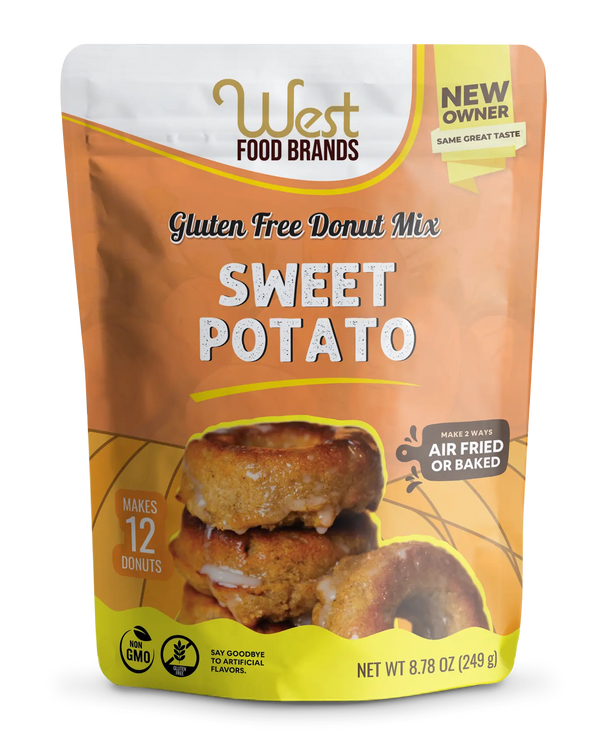
Because it solves the texture problem in one step. Sweet potato flour keeps gluten free donuts soft and moist instead of dry, and it adds a natural sweetness and real nutrition from the vegetable. We blend it with a rice flour base and a starch so the donuts hold together without wheat, then keep the rest of the label clean with no preservatives or artificial sweeteners. You can see the full blend on what is in our mixes.
Frequently asked questions about sweet potato flour
Is sweet potato flour the same as sweet potato starch?
No. Sweet potato flour is the whole dried vegetable ground fine, so it keeps the fiber and nutrients. Sweet potato starch is only the extracted starch, used mainly to thicken and lighten texture.
Can I make sweet potato flour at home?
You can, by thinly slicing sweet potatoes, drying them fully, and grinding them, but it is time consuming. For consistent baking, a store-bought flour or a pre-made mix is more reliable.
Is sweet potato flour grain free and paleo?
Yes. Since it is made from a vegetable, sweet potato flour is grain free and fits paleo baking, which is one reason it is popular in gluten free recipes.
Does sweet potato flour need xanthan gum?
In most bakes, yes. Sweet potato flour has no gluten, so it needs a binder like xanthan gum or flax to hold structure. A good mix already includes the binder.
How should I store sweet potato flour?
Keep it in an airtight container in a cool, dry place, or in the fridge for longer life. Like most whole-food flours, it lasts longer when kept cool and sealed.
Which bakes work best with sweet potato flour?
Moist, tender bakes like donuts, muffins, quick breads, and soft cookies suit it best, since it adds moisture rather than structure.
Key takeaways
· Sweet potato flour is a naturally gluten free flour made from dried, ground sweet potatoes.
· It adds moisture, a soft crumb, mild sweetness, and real fiber and vitamin A to gluten free baking.
· It is not a one-to-one wheat swap, so it works best as 20 to 30 percent of a flour blend.
· Choose certified gluten free if you bake for celiac disease, to rule out cross contamination.
· A pre-blended mix gives you the benefits of sweet potato flour without testing ratios yourself.
Want sweet potato flour already blended and ready? Grab the Sweet Potato Donut Mix, or see it baked up in our gluten free baked sweet potato donuts recipe.
Trusted sources
· Harvard T.H. Chan School of Public Health, The Nutrition Source: Sweet Potatoes
· Celiac Disease Foundation: Sources of Gluten
· USDA FoodData Central: Sweet potato, cooked, baked in skin
U.S. Food and Drug Administration: Gluten-Free Labeling of Foods