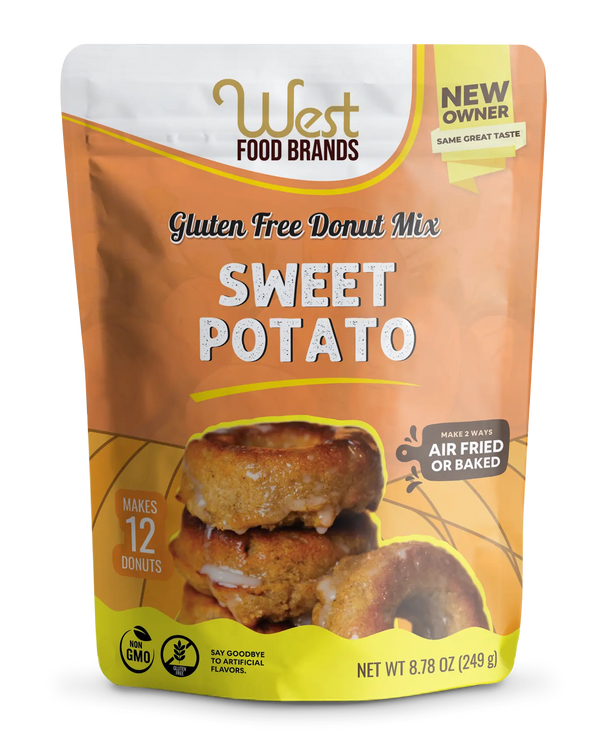
TL;DR: Are donuts gluten free? Most are not. A standard donut is fried or baked with wheat flour, which contains gluten, so it is off limits on a gluten free diet. Donuts are only gluten free when every ingredient is, including the flour. The reliable way to get one is to bake from a certified gluten free mix like the West Food Brands Sweet Potato Donut Mix, which is tested to under 20 parts per million of gluten.
This is one of the most common questions people search before buying or ordering, and the answer matters most for anyone with celiac disease, where even a small amount of gluten causes harm. Here is what makes a donut contain gluten, how to spot a safe one, where cross contamination hides, and the easiest way to make donuts you can trust.
Are donuts gluten free or do they contain gluten?
Most donuts contain gluten. The classic donut is built on wheat flour, and wheat is one of the main sources of gluten, the protein that gives dough its stretch. That applies to yeast-raised donuts, cake donuts, and most bakery and chain-store donuts. A donut is gluten free only when it is made with a gluten free flour instead of wheat, and when it is not contaminated by gluten during mixing or frying.
Why are most donuts not gluten free?
The flour is the problem. Wheat flour is the base of nearly every traditional donut recipe, and it is there for the gluten, which traps air and gives the donut its chew and rise. Gluten is found in wheat, barley, rye, and triticale, according to the Celiac Disease Foundation. Because wheat flour is the single largest ingredient by volume in a donut, there is no way to make a standard donut gluten free without replacing it entirely.
What makes a donut gluten free?
A donut is gluten free when two things are true. First, every ingredient is gluten free, which means the wheat flour is swapped for a gluten free blend such as rice, sweet potato, or almond flour, and nothing else in the recipe hides gluten. Second, the donut is made without cross contamination, so it never touches surfaces, oil, or equipment that handled wheat. A mix made in a dedicated facility removes most of that risk before you even start.
How can you tell if a donut is gluten free?
Look for a certified gluten free label, not just the words "gluten free" on a menu. Certification means the product is tested to contain less than 20 parts per million of gluten, the limit the U.S. Food and Drug Administration sets for a gluten free claim. A few checks help:
· Check for a certification seal or a clear "certified gluten free" statement on the package.
· Read the ingredient list for wheat, barley, rye, malt, and "wheat starch" that is not labeled gluten free.
· At a bakery, ask whether gluten free donuts are fried in shared oil, since shared oil carries gluten.
· When in doubt, bake at home from a certified mix, where you control every step.
Are baked donuts gluten free?
Not automatically. Baking instead of frying removes the shared-fryer risk, but a baked donut still contains gluten if it is made with wheat flour. The cooking method does not change the flour. A baked donut is gluten free only when it starts from a gluten free flour or mix. The upside is that baking from a certified mix at home is the most reliable way to get a safe donut, since there is no shared fryer and no wheat in the kitchen step.
Is cross contamination a risk with gluten free donuts?
Yes, and it is the part people miss. A donut can start gluten free and still pick up gluten. The most common sources are shared fryer oil that also cooks wheat donuts, shared utensils and pans, and flour dust in a bakery that uses wheat. For someone with celiac disease, even a small amount of gluten can trigger symptoms and intestinal damage, according to the National Institute of Diabetes and Digestive and Kidney Diseases. Baking at home from a mix avoids shared oil and shared equipment entirely.
What is the easiest way to get a gluten free donut?
Bake from a certified gluten free donut mix. It is faster than a from-scratch gluten free recipe, since the flour blend and the binder are already measured, and it is safer than ordering out, since there is no shared fryer. You add eggs or flax eggs, oil, and milk, then bake at 350°F for 12 to 15 minutes for a dozen donuts. The mix is also certified gluten free, non GMO, and made with no preservatives or artificial sweeteners. For the full ingredient breakdown, see what is in our mixes.
Frequently asked questions about gluten free donuts
Are Krispy Kreme or Dunkin donuts gluten free?
No. Major chains like these make donuts with wheat flour and fry many products in shared oil, so they are not safe on a gluten free diet. Always check a brand's current allergen statement, but standard chain donuts contain gluten.
Are cake donuts gluten free?
Not usually. Cake donuts are still made with wheat flour. They are gluten free only when the recipe uses a gluten free flour blend in place of wheat.
Are gluten free donuts also dairy free or vegan?
Not always, since gluten and dairy are different things. A gluten free donut can still contain milk, butter, or eggs. A mix that is plant based, like ours, can be made vegan and dairy free by using flax eggs, plant milk, and coconut oil.
Can people with celiac disease eat gluten free donuts?
Yes, when the donut is certified gluten free and made without cross contamination. Baking at home from a certified mix is the safest route for people with celiac disease.
Does gluten free mean healthier?
Not by itself. Gluten free means safe for a gluten free diet, not low calorie. A gluten free donut is still a treat, so portion it like any baked good.
What flour is used in gluten free donuts?
Common choices are rice flour, sweet potato flour, almond flour, and tapioca or potato starch. Our donut mix uses a rice and sweet potato based blend so the donuts stay soft without wheat.
Key takeaways
· Most donuts are not gluten free, because they are made with wheat flour, which contains gluten.
· A donut is gluten free only when every ingredient is gluten free and there is no cross contamination.
· Look for a certified gluten free label, which means under 20 parts per million of gluten.
· Baked donuts still contain gluten if they use wheat flour, so the method does not make them safe.
· The easiest reliable option is to bake from a certified gluten free mix at home.
Want a donut you can trust? Grab the certified Sweet Potato Donut Mix, or follow our step-by-step gluten free baked sweet potato donuts recipe.
Trusted sources
· Celiac Disease Foundation: Sources of Gluten
· U.S. Food and Drug Administration: Gluten-Free Labeling of Foods
· National Institute of Diabetes and Digestive and Kidney Diseases: Celiac Disease
Harvard T.H. Chan School of Public Health: Celiac Disease and the Gluten Free Diet